
SAFA GLOBAL VENTURES
Wind Energy Opportunities Across Global Markets
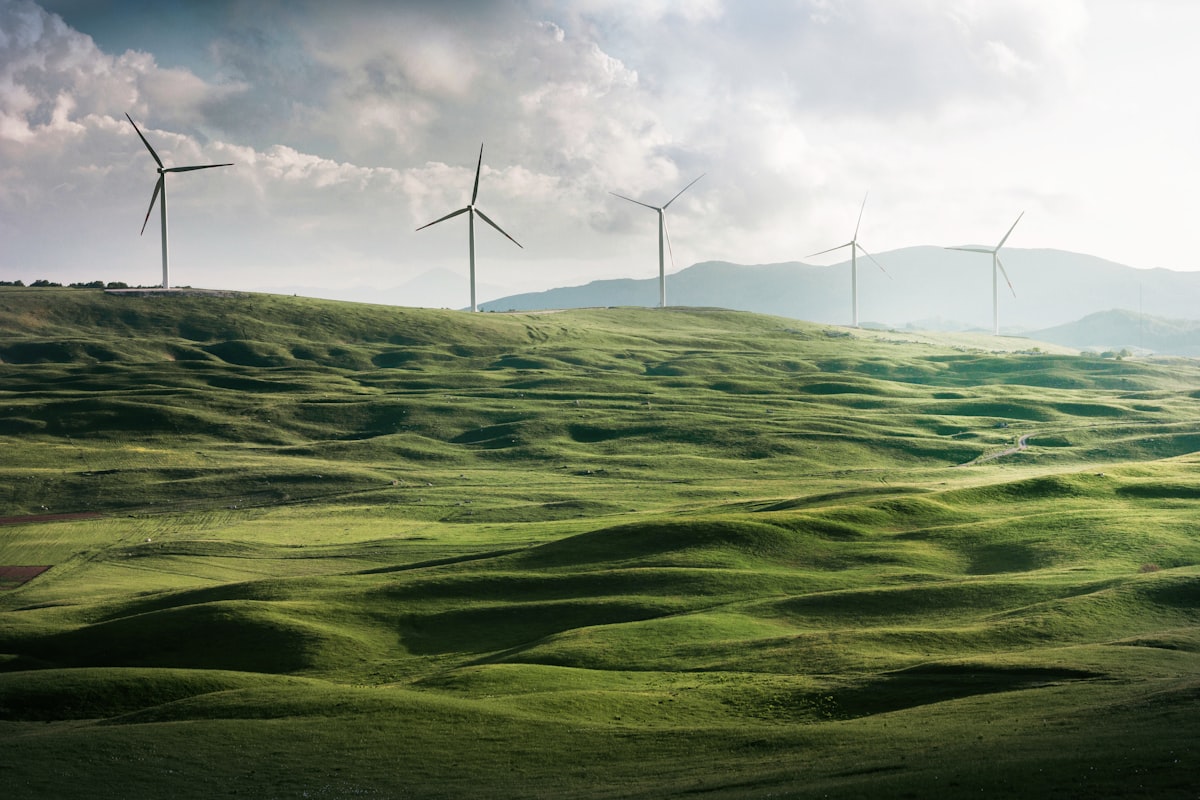
The global wind energy sector stands at an inflection point. As nations race to meet ambitious decarbonization targets, wind power deployment is accelerating at unprecedented rates across six continents. Yet beneath the spinning turbines lies a less visible but equally critical challenge: the specialized materials infrastructure needed to anchor these massive structures to the earth and seabed.
This analysis examines a €2.5-3.2 billion market opportunity in wind turbine foundation materials across Europe, North Africa, the Gulf Cooperation Council, Latin America, China, and Japan. We identify strategic entry points where technical differentiation can command premium pricing and sustainable competitive advantages.
The Foundation Challenge
Every wind turbine, whether onshore or offshore, requires a massive concrete foundation. A typical offshore installation demands 1,000-1,500 tons of specialized, high-performance concrete. Multiply this across the hundreds of wind farms in global development pipelines, and the scale becomes clear: approximately 24-30 million metric tons of specialized cement will be required between 2025 and 2030.
But this is not commodity concrete. Offshore installations demand marine-grade formulations with enhanced sulfate resistance. Seismic zones require earthquake-resistant specifications. Desert environments necessitate extreme-temperature resilience. These technical requirements create natural barriers to entry and allow differentiated suppliers to command 15-25% premiums over standard products.
The opportunity lies not in competing on volume, but in mastering the technical complexity that major developers require and commodity suppliers cannot deliver.
Europe: The Offshore Anchor Market
Europe has established itself as the undisputed leader in offshore wind development, transforming the North Sea and Baltic Sea into industrial-scale renewable energy zones. The EU's REPowerEU plan, accelerated by energy security concerns, has pushed 2030 targets to 480 GW of total wind capacity—more than double the current 220 GW installed base. The offshore segment represents the most dynamic growth area, with over 60 GW of new capacity in development pipelines.
This offshore boom creates exceptional demand for specialized foundation materials. Unlike onshore installations, offshore turbines face relentless assault from saltwater, requiring marine-grade cement formulations with enhanced sulfate resistance and dramatically reduced permeability. Weather windows for offshore construction are narrow and expensive, making rapid-setting formulations that can cure in 24-48 hours essential for project economics.
The supply chain tells a story of emerging constraints. While Heidelberg Materials and Holcim dominate the European cement market, their product portfolios have historically focused on building and infrastructure applications. Offshore wind represents a specialized niche where technical certification, not production scale, determines market access. Major developers like Ørsted, RWE, and Iberdrola maintain rigorous supplier qualification processes that can take 18-24 months to navigate. This creates a natural moat around established suppliers but also represents an entry opportunity for technically sophisticated new participants.
The market opportunity is substantial: €650-820 million in foundation materials through 2030. More importantly, European offshore projects serve as global reference cases. A successful track record with demanding North Sea installations opens doors to emerging offshore markets in Asia, North America, and beyond.
Three strategic entry points exist. First, pre-casting facilities near major offshore hubs like Rotterdam, Hamburg, and Copenhagen can reduce logistics costs by 25-35% while enabling just-in-time delivery during tight construction schedules. Second, exclusive supply agreements with offshore installation contractors like Van Oord or DEME can lock in multi-year demand streams. Third, technical partnerships with turbine OEMs to co-develop next-generation foundation specifications create specification lock-in before tenders are issued.
North Africa: Europe's Renewable Energy Backyard
Across the Mediterranean, North Africa is emerging as Europe's renewable energy supplier. The region combines world-class wind resources averaging 8-11 meters per second with submarine cable proximity to European demand centers. This geographic advantage has catalyzed ambitious deployment targets: Morocco aims for 5.2 GW by 2030, Egypt 4.2 GW, and Tunisia 1.75 GW. More significantly, these nations are positioning wind power as the foundation for green hydrogen export industries targeting European markets desperate to replace Russian natural gas.
Morocco leads the charge with flagship developments like the 301 MW Tarfaya wind farm and the Midelt complex. The kingdom has secured HVDC interconnector capacity to Spain, creating a direct energy export pathway. Egypt's Gulf of Suez wind corridor, stretching along the Red Sea coast, offers exploitable potential exceeding 7,200 MW. Projects at Zafarana, Ras Ghareb, and West Bakr are already operational, with the government targeting 14% of electricity from wind by 2035.
The materials supply chain presents a paradox of abundance and scarcity. North Africa produces 40-50 million tons of cement annually across Morocco, Egypt, and Tunisia, suggesting ample capacity. However, quality variance creates opportunity. Local producers do not universally meet European EN 197-1 standards, forcing developers to import specialized blends at 15-20% premiums. More critically, transportation infrastructure creates bottlenecks. Egypt's best wind sites lie along the Red Sea coast, over 500 kilometers from Nile Valley cement plants. Morocco's coastal wind zones are distant from major production centers.
This logistical challenge creates the entry strategy. Mobile batching plants positioned at remote coastal construction sites can overcome infrastructure constraints while reducing transport costs by 25-35%. Technical partnerships with local producers like Lafarge Egypt or Ciments du Maroc to certify specialized blends for European-standard projects capture market share without capital-intensive greenfield facilities.
The €180-220 million market opportunity through 2030 understates the strategic value. North African projects serve as stepping stones to larger GCC and Sub-Saharan markets, while early relationships with developers position suppliers for the green hydrogen mega-projects that will follow wind deployment.
The GCC: Premium Markets, Extreme Environments
The Gulf Cooperation Council states are leveraging wind resources to support Vision 2030 economic diversification goals while reducing domestic fossil fuel consumption for power generation. Saudi Arabia's 400 MW Dumat Al Jandal project, the kingdom's first utility-scale wind farm, validates northern region resources averaging 7-8 meters per second. The target of 4 GW by 2030 positions wind as a cornerstone of NEOM's renewable energy strategy, where massive wind-hydrogen integrated projects are taking shape in the Red Sea development zone.
The UAE's offshore pivot represents a different opportunity. With limited onshore potential, Masdar and other Abu Dhabi developers are assessing Arabian Gulf offshore wind potential to integrate with green hydrogen export ambitions. Oman's Dhofar region offers over 2,000 MW of exploitable wind resources, with the Harweel and Duqm projects targeting green ammonia production for Asian markets.
Materials requirements in the GCC differ fundamentally from European contexts. Ambient temperatures regularly exceed 45°C, demanding modified concrete formulations that maintain workability and achieve design strength under extreme heat. Saline coastal environments require enhanced sulfate resistance beyond standard marine-grade specifications. Limited weather windows between sandstorms favor rapid-setting blends that minimize on-site curing time.
These extreme-environment requirements create premium positioning opportunities. While the GCC produces over 90 million tons of cement annually in Saudi Arabia alone, specialized wind foundation products command €50-80 per ton premiums over commodity pricing. The €120-150 million market through 2032 may appear modest, but margin profiles exceed those in more competitive markets.
The strategic approach centers on partnerships with Saudi cement majors like Yamama and Saudi Cement for product development, then leveraging these relationships to target NEOM and Red Sea mega-projects where integrated wind-hydrogen supply packages offer differentiation.
Latin America: The Patagonian Powerhouse
Latin America combines some of the world's most exceptional wind resources with growing electricity demand and aggressive decarbonization commitments. The four major markets—Brazil, Chile, Argentina, and Mexico—collectively target 65 GW of capacity by 2030, creating demand for 4-5 million tons of specialized foundation materials valued at €320-420 million.
Brazil's auction-driven market has achieved remarkable competitive pricing, with recent contracts below $25 per MWh. The northeast region, particularly Bahia and Rio Grande do Norte, accounts for 80% of the country's 28 GW installed base, with targets reaching 45 GW by 2030. Local content requirements mandate 60% minimum domestic sourcing, including towers and foundations. This regulatory framework favors joint ventures with established producers like Votorantim and InterCement over import models.
Chile presents a different value proposition. The Atacama Desert and Patagonian sites achieve capacity factors of 45-50%, among the world's highest, making projects economically viable despite remote locations requiring 500-kilometer transmission builds. The country's 15 GW wind target by 2032 serves as foundation for 25 GW of green hydrogen pipeline projects. Critically, Chile's seismic requirements increase foundation cement consumption by 15-20% compared to non-earthquake zones, creating technical differentiation opportunities for suppliers with seismic engineering expertise.
Argentina's Patagonian wind corridor offers exceptional resources with average speeds exceeding 10 meters per second, but economic volatility complicates project financing. Export-oriented green hydrogen developments provide a more stable investment case, as European and Asian off-take agreements buffer currency risk. Mexico's Oaxaca Isthmus hosts concentrated development potential exceeding 8 GW, with the added advantage of cross-border transmission to Texas creating US market access.
The strategic imperative across Latin America is partnership-based market entry. Brazil's local content rules necessitate joint ventures. Chile and Mexico's seismic zones reward technical expertise over scale. Argentina's remote Patagonian sites demand mobile batching solutions to overcome logistics costs that can reach 25-35% of total materials expense. Success requires tailoring approaches to each market's specific regulatory, technical, and logistical context rather than attempting a one-size-fits-all strategy.
China: Scale Without Access
China dominates global wind deployment with 470 GW of installed capacity, representing 40% of the worldwide total, and targets exceeding 600 GW by 2030. The offshore segment is experiencing explosive growth, with 45 GW already installed—the world's largest offshore fleet—and plans for 100+ GW by decade's end. Coastal provinces like Jiangsu, Guangdong, and Fujian are driving development, while floating offshore pilot projects totaling 500+ MW are entering demonstration phases.
This scale translates to a €1.2-1.5 billion annual materials market. However, foreign accessibility remains below 5% for structural reasons that transcend competitive positioning. The "dual circulation" policy explicitly prioritizes domestic suppliers. State-owned cement giants like CNBM and Anhui Conch have vertically integrated wind foundation products with cost optimization that leaves razor-thin margins incompatible with import economics. Technical standards based on GB and JGJ specifications differ from international EN and ASTM norms, requiring expensive recertification. Perhaps most critically, relationship-driven procurement in a market where domestic manufacturers like Goldwind, Envision, and Ming Yang control 95% of turbine sales creates nearly insurmountable barriers for foreign materials suppliers.
The strategic approach must therefore treat China as a learning market rather than a profit center. Technology licensing through joint ventures enables IP transfer while establishing relationships that can be leveraged when Chinese EPC contractors undertake wind projects in third markets across Africa, Latin America, and Southeast Asia. The goal is not capturing Chinese domestic market share, but rather positioning to supply Chinese developers' international portfolios where foreign technical expertise carries value.
Japan: Floating Offshore and Patient Capital
Japan's renewable energy transition, accelerated by the post-2011 Fukushima nuclear phase-down, faces unique geographic constraints. Limited flat land, mountainous terrain, dense population, and community opposition to onshore wind have pushed the industry toward floating offshore solutions. The 6th Strategic Energy Plan's target of 60 GW by 2040 envisions 45 GW from floating platforms—a technological frontier where Japan's engineering strengths in semi-submersible platforms and typhoon-resistant designs create global leadership potential.
The Goto Islands commercial floating wind farm, at 16.8 MW the world's first such facility, demonstrates technical feasibility. Fukushima demonstration projects have validated platform designs in harsh open-ocean conditions. Auction zones designated in Akita, Choshi, and Nagasaki are attracting European developers like Equinor, Ørsted, and RWE who bring North Sea expertise to Japanese waters. Cost trajectories project floating offshore LCOE declining from current ¥25-30 per kWh to ¥8-9 by 2030-2035 as technology matures and supply chains scale.
Materials requirements differ markedly from fixed-bottom offshore foundations. Floating platforms are steel-intensive rather than concrete-intensive, reducing cement consumption but creating opportunities for ultra-high-performance concrete in specialized components like anchor blocks and mooring systems. More significantly, Japanese quality standards are among the world's most stringent. Structures must withstand magnitude 7+ earthquakes, typhoon wind loads 20-30% higher than European design standards, and aggressive corrosion from the Kuroshio Current. Certification through third-party bodies like ClassNK or JQA typically requires 18-24 months.
The €60-90 million annual market opportunity understates both the challenge and the value. Japan's domestic preference for quality assurance and just-in-time delivery creates formidable barriers for foreign suppliers. Three-to-five-year relationship cultivation before first contract awards is standard. However, success in the Japanese market carries global signaling value that transcends the direct revenue opportunity. The strategic approach must emphasize technology licensing partnerships with domestic producers like Taiheiyo Cement or Ube-Mitsubishi, targeting European developers entering Japanese auctions who prefer familiar suppliers, and viewing the market as a long-term technical partnership rather than a transactional commodity play.
Strategic Framework: Prioritized Market Entry
The €2.5-3.2 billion total addressable market across these six regions presents vastly different accessibility profiles and return potentials. A disciplined allocation framework is essential to avoid capital dispersion across too many simultaneous fronts while ensuring portfolio diversification against single-market risks.
**Tier 1 markets—Europe and North Africa—should command 60% of capital deployment.** Europe's €650-820 million opportunity combines high accessibility, premium pricing power, and global reference value. Offshore projects in the North Sea set technical benchmarks that unlock other markets. North Africa's €180-220 million market offers first-mover advantages as supply constraints emerge and European quality standards take hold through HVDC interconnector projects. These markets share technical requirements, enabling product portfolio leverage, and both reward early-stage relationship building that compounds over time.
**Tier 2 markets—Latin America and the GCC—merit 30% capital allocation** as strategic development opportunities. Latin America's €320-420 million market demands patient partnership development, particularly in Brazil where local content rules necessitate joint ventures, and Chile where seismic expertise creates differentiation. The GCC's €120-150 million opportunity, while smaller, offers the highest margin profile due to extreme-environment technical requirements. Both regions benefit from expertise developed in Tier 1 markets while reducing portfolio concentration risk.
**Tier 3 markets—Japan and China—should receive just 10% of capital,** focused on strategic positioning rather than near-term revenue generation. Japan demands three-to-five-year relationship cultivation before commercial success but offers premium pricing and global signaling value. China's domestic market remains largely inaccessible, but strategic presence enables future supply relationships with Chinese developers' third-market projects.
This tiered approach enables a €10-12 million initial capital deployment to target 10-12% market share in accessible segments, translating to €250-350 million cumulative revenue over five years with blended IRR of 18-23%. The framework prioritizes speed-to-market in Europe and North Africa while building long-term positioning in Asia and Latin America.
Five Product Lines, Four Business Models
Success requires both product differentiation and business model adaptation across distinct market contexts. Five core product lines address the technical performance requirements that justify premium pricing.
**Marine-grade offshore formulations** with enhanced sulfate resistance and low permeability serve European and GCC offshore markets, commanding 20-25% premiums over commodity concrete. **Rapid-setting blends** that cure in 24-48 hours minimize weather-window risk in offshore Europe and remote Patagonian sites, earning 15-20% premiums. **High-early-strength products** accelerate construction timelines in North Africa and Latin America, capturing 12-18% price improvements. **Seismic-performance specifications** for Chile, Mexico, and Japan offer 18-25% premiums by meeting earthquake-resistant design standards. Finally, **extreme-temperature formulations** for GCC and North African summer concreting command 15-22% premiums through 45°C+ workability retention.
These products gain competitive protection through four overlapping moats: technical certification with major developers, documented performance track records in offshore and seismic projects, co-developed specifications with turbine OEMs, and logistics integration through pre-casting facilities that reduce delivery times 40-60% versus batch-plant models.
Business model execution varies by market. **Joint ventures** in China and Latin America overcome local content requirements while securing production capacity, with 40-60% equity stakes maintaining quality control. **Exclusive supply agreements** with European and North African offshore installation contractors lock in multi-year demand to amortize pre-casting facility investments. **Technical partnerships** with turbine OEMs create specification lock-in and preferred supplier status in tender documents. **Regional hub strategies** position pre-casting facilities near major ports in Morocco, Chile, and Egypt to optimize logistics economics.
The Path Forward
The convergence of accelerating wind deployment, technical performance requirements, and emerging supply constraints creates a window of opportunity that will not remain open indefinitely. Offshore projects are entering mass deployment between 2026 and 2030. First-mover advantages in North Africa and GCC offshore markets are still available. Technology partnerships with European developers expanding into new geographies offer entry pathways.
A focused €10-12 million market entry strategy emphasizes Europe (€4-5M investment) and North Africa (€2-3M) as immediate priorities, with selective positioning in the GCC (€1.5-2M) and Latin America (€1-1.5M), plus strategic intelligence investments in Japan and China (€500K each). This allocation targets early pilot projects in 2026, full production capacity by 2027-2028, and established supplier status across three to four core markets by 2030.
Execution hinges on five critical success factors. **Technical credibility** established through early pilot projects creates the reference cases needed for larger contracts. **Speed to market** in North Africa and GCC offshore captures first-mover advantages before competition intensifies. **Partnership quality** with Tier 1 developers unlocks tender access and shapes specifications. **Operational excellence** in on-time, on-specification delivery builds the reputation premium pricing requires. **Geographic diversification** across Europe, North Africa, and Latin America mitigates single-market concentration risk.
The revenue trajectory follows a predictable pattern: €8-15 million during the 2026-2027 market entry phase as pilot projects commission and Tier 1 partnerships formalize, scaling to €45-75 million annually in 2028-2029 as production capacity reaches full utilization and Tier 2 markets activate, then achieving €80-120 million annual run-rates by 2030 as established supplier status in multiple markets compounds.
This is not a commodity play. Success requires mastering technical complexity, navigating rigorous certification processes, and building trust-based relationships with demanding developers. But for suppliers willing to make these investments, wind energy foundations represent a €2.5 billion strategic bottleneck in global decarbonization infrastructure where differentiation creates sustainable competitive advantages and premium returns.
---
*Analysis prepared by Safa Global Ventures Research. Market data compiled from IEA, GWEC, IRENA, regional energy ministries, and industry sources (February 2026). Financial projections are estimates based on current market conditions and require detailed feasibility validation for investment decisions.*